
North-East Indian cooking is built on smoke, fermentation, and foraged herbs, and one restaurant menu in Singapore calls it India’s least known cuisine. The Manor, a fine dining restaurant at Amara Singapore in Tanjong Pagar, gives it a dedicated section of its 2026 menu, titled Northeast India, with the tagline “Forests, Ferments & Firewood.” The sections below explain what defines the cuisine, what that section of the menu lists, and what to know before you order.
The menu describes the region’s food as elemental, tied to bamboo groves, forest herbs, and mountain streams. It names the states it draws on and what each is known for:
Across the hills, bamboo shoots, axone and foraged herbs shape the table, and the menu describes fermentation as a way of life that preserves abundance for leaner months. It calls this India’s least known yet most primal cuisine, firewood, smoke and spice in its purest form.
A useful test is whether a menu names the states and ingredients it draws on, rather than using “North-East” as a general label. A dedicated section with an introduction, named regional flavours, and dishes marked by type makes it easier to see what you are ordering. It also helps to ask what is regional and what is a modern interpretation, since a restaurant can honour a region’s ideas without serving its traditional dishes.
The Manor’s Northeast India section lists four entrées and four main courses, each with a suggested wine and cocktail. The dishes are:
| Dish | Price | Description |
| Himalayan Silken Dumplings | $26 | Tibetan and Nepalese chicken dumplings in a fragrant Nepali-inspired broth |
| Crystal Truffle Dimsums | $28 | Hand-folded dimsum filled with creamy cheese and black truffle |
| Dynamite Paneer Martini | $30 | Crispy cubes of cottage cheese tossed in a tangy-spicy creamy sauce |
| Dynamite Shrimp Shots | $36 | Crispy shrimp in a tangy-spicy creamy sauce, served as bite-sized shots |
| Signature Fusion Baos | $26 vegetarian, $30 chicken, $34 lamb | Soft baos with Indo-Nepalese fillings and a spice drizzle |
| Spicy Chicken Lollipops | $32 | Chicken drums tossed in pepper and onion masala |
| Himalayan Thukpa | $26 vegetarian, $30 chicken | A hearty noodle soup with flavours of Ladakh and Sikkim |
| Zenith Valley Khao Suey | $26 vegetarian, $30 chicken | A hearty noodle soup with a spiced coconut silk consommé |
Read the list with the right expectations. The section’s introduction draws on Assamese, Naga and Khasi traditions, but the dishes listed lean Himalayan and pan-Asian, with Tibetan, Nepalese and Indo-Nepalese influences. Traditional preparations named in the introduction, such as fish tenga or dishes built on axone, do not appear on the 2026 list. If you are after those specifically, ask the team before you book.
Every dish on the menu carries a suggested wine and cocktail. In this section, the Himalayan Silken Dumplings are paired with a Marqués de Murrieta Gran Reserva 2016 and the Darjeeling Highball cocktail, and the Himalayan Thukpa with the same wine and an Assam Tea Toddy. The Signature Fusion Baos are paired with a Marqués de Murrieta Reserva 2021 and the Mint Dynasty cocktail. Pairings are set per menu edition, so treat these as the 2026 suggestions.
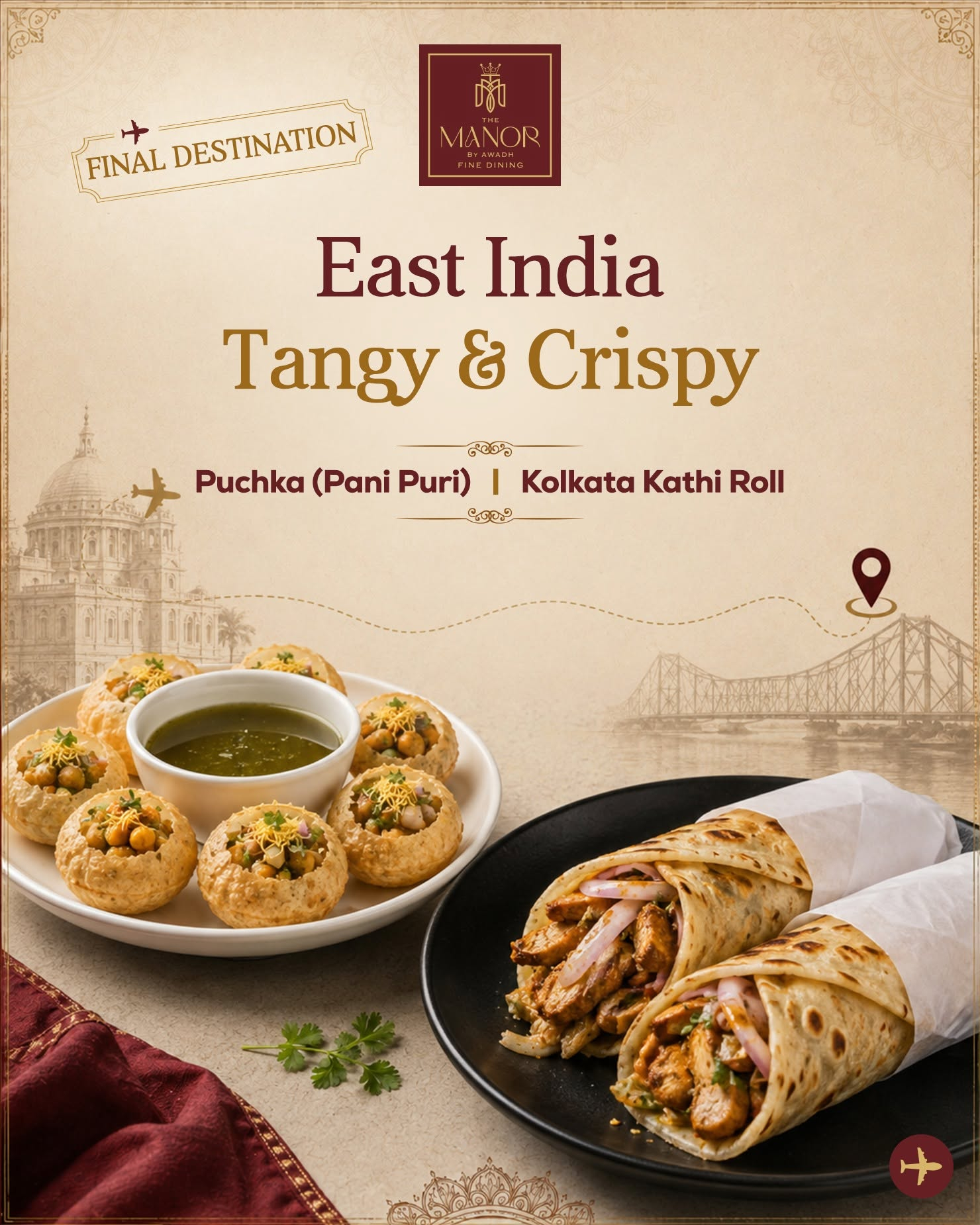
The thukpa, khao suey and baos come in vegetarian versions, and dishes across the menu are marked as vegetarian, chicken, mutton, fish or prawns. The Northeast India section sits alongside five others: South India, West India, East India, North India and the Cuisine of Awadh. A table can order from this section and from others, so one starter from the hills can sit next to a main from Lucknow or Kerala. All prices are subject to service charge and government taxes.
Whether the cuisine is new to you or you already know the region well, a table at The Manor is an easy way to try it in a setting made for a proper sit-down meal. Browse the menu, choose a dish or two from the section that appeals, and reserve ahead so the evening is settled before you arrive.
The menu draws on Assam, Nagaland, Mizoram, Manipur and Meghalaya, and names Khasi, Naga and Assamese flavours as the section’s signatures.
The menu names bamboo shoots, axone (fermented soya bean), foraged herbs, bhut jolokia chilli, and fermented fish, and describes fermentation as central to the cuisine.
Yes. The 2026 menu has a Northeast India section, “Forests, Ferments & Firewood,” with eight dishes priced from $26 to $36 before service charge and taxes.
Yes. The thukpa, khao suey, and baos are available in vegetarian versions, and the dynamite paneer is a vegetarian dish.
Yes. The Northeast India section is one of six on the menu, so its dishes can be ordered alongside dishes from South India, West India, East India, North India, and the Cuisine of Awadh.